
Gut Program
Gut Program
The gut has several roles, digestion being its primary but not only role.
Digestion is the process of intake, breaking down, assimilating, detoxifying and then eliminating. Digestion has several phases, and involves a significant amount of our internal real estate. Not including our eyes and nose, our formal digestive system begins with our then mouth and continues with the esophagus, stomach, small and large intestines, and ends with the rectum and anus. The various organs that attach to this tube include the liver and gallbladder, pancreas, appendix, omentum, as well as the nervous system (called the enteric plexus or second brain) that is within the walls of the tube. Any part of this tube can affect any other part of the tube. Upper gut dysfunctions include dental and sinus issues, throat and tonsil issues, esophagitis and reflux disease and ulcers. Lower gut dysfunctions can look like diseases of the liver, gallbladder and pancreas, small and large intestines and colon. Pain and cancer can affect any part of the tube.
Leaky Gut Syndrome
Gut-Brain
Probiotics
Stomach Acid Article

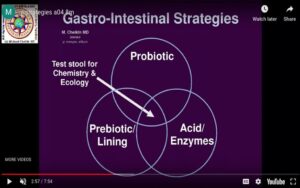
GI Strategies
Malnutrition vs Malabsorption

Stomach Acid Video

