
Essential Fatty Acids (EFAs), Omega-3 and Omega-6 Oils, and Fish Oil
Inflammation Program
Bottom Line Summary
“Essential Fatty Acids” (EFAs) include omega-3, omega-6 and related oils such as omega-7 and omega-9.
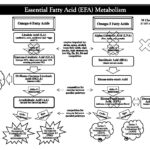
The nutritionally essential Omega-3’s are: DHA and EPA. See diagram for more detail. Be careful not to confuse DHA for DHEA, which is a completely separate sterol hormone.
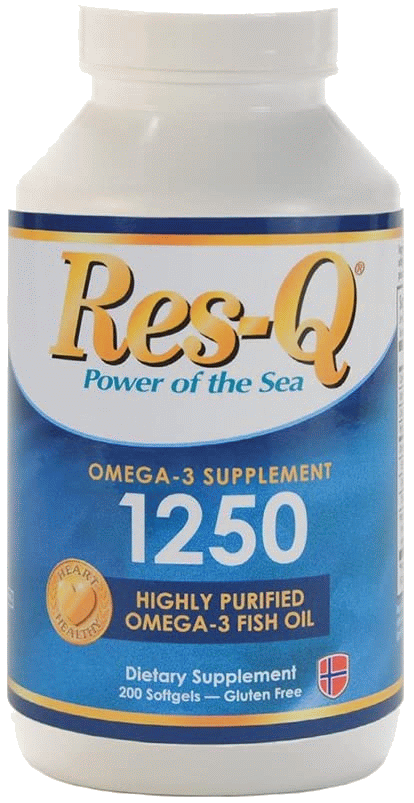
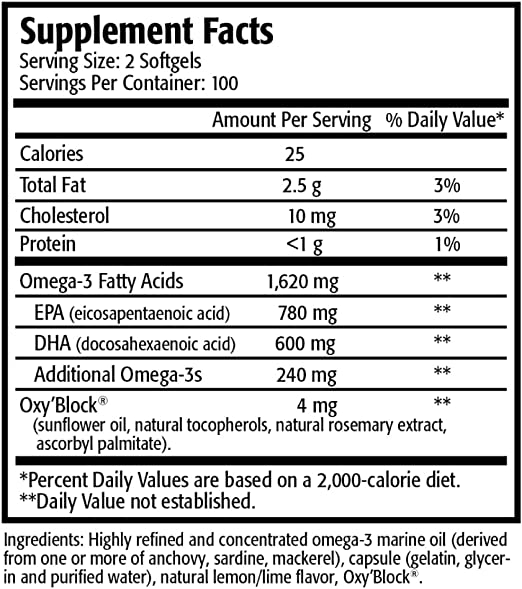
“Fish Oils” and Omega-3 products are derived from the livers of cold-water fish and critters known to have high o3 (including salmon, anchovy, krill) contain only a certain percentage of EPA and DHA. A good brand will specify on the label the exact amounts of EPA and DHA on the label, as you can see below for the ResQ 1250 product
Intolerance of several fish oils brands warrants evaluation of the GI tract.
The nutritionally essential Omega-6 is GLA (gamma linolenic acid), which may also may be low, and can compete with Omega-3 for absorption and internal processes.
Balance of healthy Omega-3 and Omega-6 is the goal.
Omega-9’s and Krill oil may provide additional benefits but best after the “core” nutients are satisfactorily covered.
Omega-3 oils are also called “fish oils,” since fish are the most abundant source. However, all animals, including humans, will make their own when properly fed and healthy.
Omega-6 oils are also essential but currently abundant in most diets, since they come from corn, wheat, and other commodity plants. More on the ratio of omega-6 to omega-3 below.
MoreEFA Diagram
Video on Essential Oils ⏱5:00

We carry ResQ as the most cost-effective brand of quality and reliability. The bottle has 200 pills, which at 4 pills per day (~ 3000 mg EPA + DHA) will last 50 days. We also have smaller, vegan and burp-free versions.
Click on the images to the right for ingredient information.
If you prefer to order through Wellevate, the recommended products are below. They are a bit more expensive, but the convenience in maintaining your program may be worth it to you. The smaller sized basic omega-3 below has a code of L01619. Each pill has 300 mg of EPA + DHA, so you will need 5 of these to provide 1500 mg.
Click on the image to the right for product numbers and additional details.

Scientific References
Dietary-n-3-and-n-6-polyunsaturated-fatty-acids-and-risk-of-atrial-fibrillation
Fatty Acid Signaling Mechanisms in Neural Cells–Fatty Acid Receptors.2019
Long-Chain o-3 Fatty Acids for Indicated Prevention of Psychotic Disorders.pdf
The Impact of Dietary Iodine Intake on Lipid Metabolism in Mice.2011
